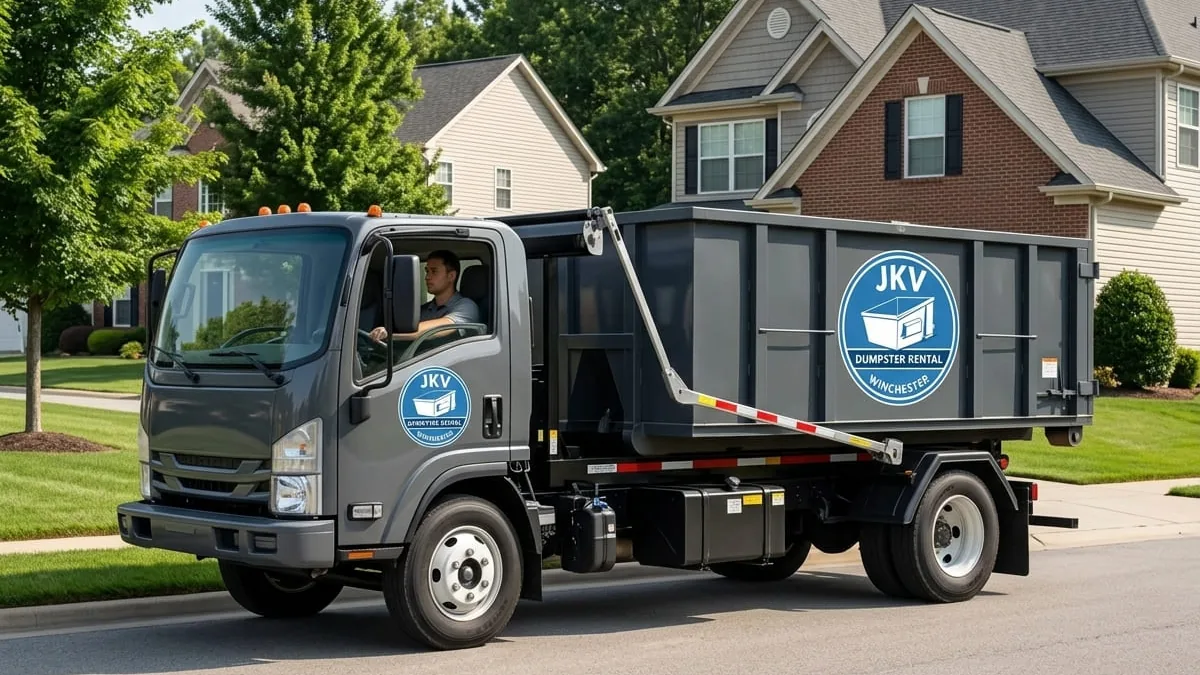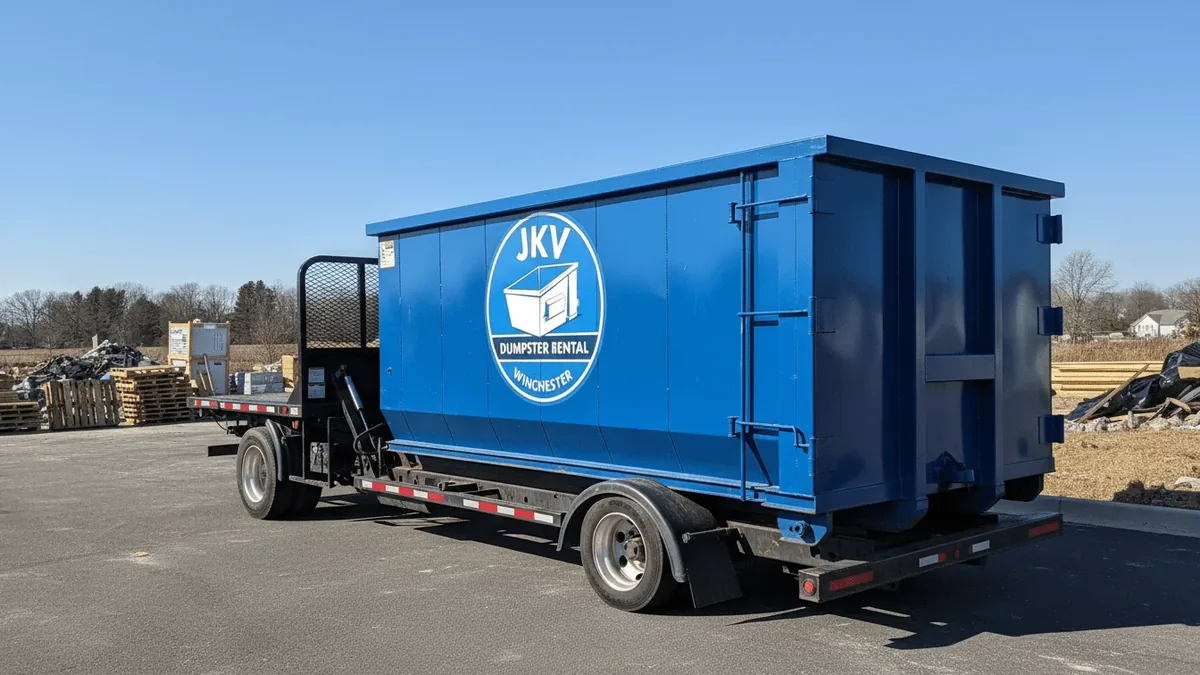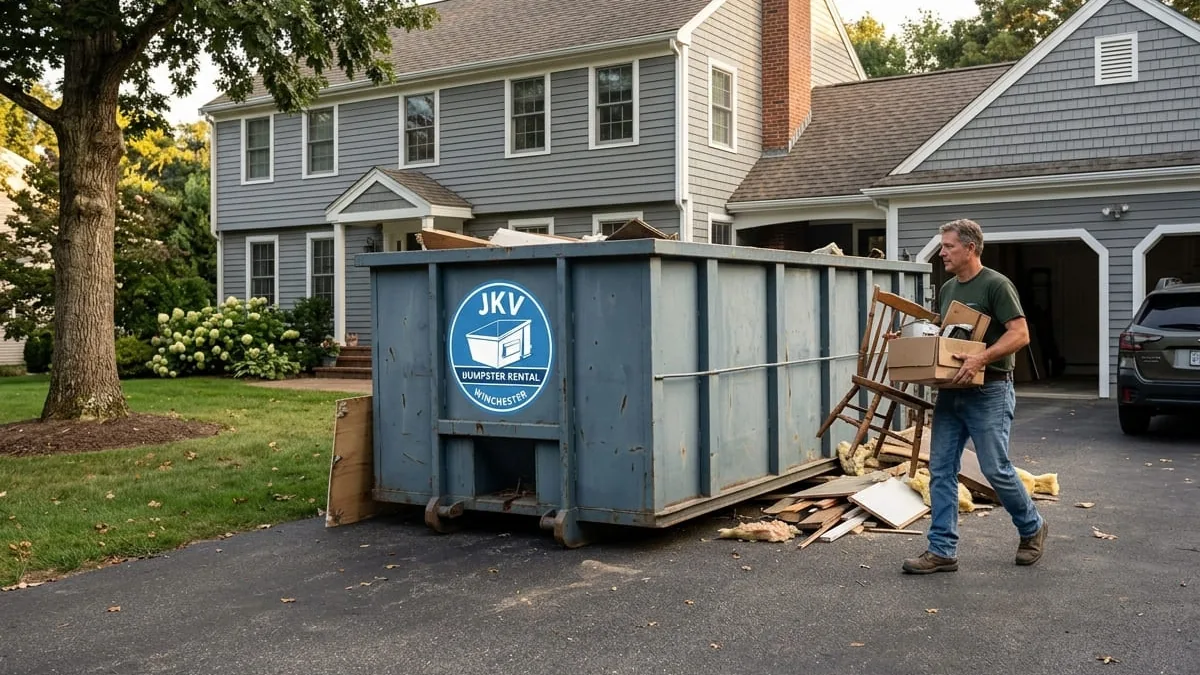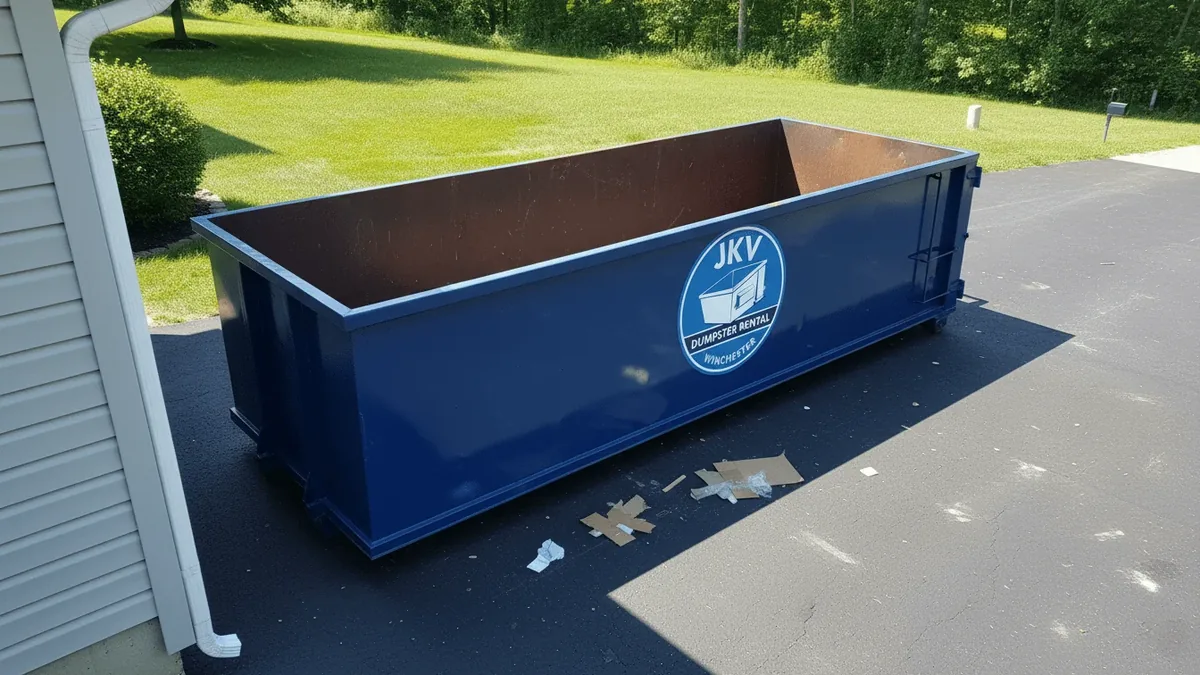
One of the first questions we get from customers renting a dumpster in Winchester or Frederick County is simple: “Can I put this in there?” Most of the time the answer is yes — roll-off dumpsters are built for exactly the mix of household junk and construction debris that comes out of a typical cleanout or remodel. But Virginia does have a handful of rules around certain materials, and a few things should never go in a container no matter how full it looks. This guide breaks it down into three groups so you can plan your load before we ever show up with the truck.
Generally Fine: The Everyday Stuff
The bulk of what fills a residential or commercial dumpster falls into this category. If you're working on a home cleanout or a construction project, this is what makes up most of the load:
- Household junk — old furniture, mattresses, boxes, general clutter from a garage or basement cleanout
- Construction and demolition (C&D) debris — lumber, framing scraps, subfloor
- Roofing materials — shingles, felt paper, and flashing from a tear-off
- Flooring — carpet, tile, vinyl, hardwood
- Drywall and plaster (as long as it isn't from a pre-1978 home where lead paint or asbestos is a concern — more on that below)
- Clean, untreated wood — deck boards, fencing, framing lumber
- Cabinetry, countertops, and fixtures pulled during a remodel
- Non-hazardous packaging and cardboard from a move or renovation
If you're not sure how big a container you need for a load like this, our dumpster size guide walks through the most common Winchester-area projects and which size fits each one.
Needs Special Handling
These items are common in cleanouts and renovations, but Virginia and Frederick County either regulate them separately or ask that they be handled outside the regular waste stream. None of them are hard to deal with — they just need a different path than tossing them in with everything else.
Yard Waste
Grass clippings, leaves, brush, and tree limbs are typically kept separate from general debris and composted rather than landfilled. If your project generates a large amount of yard debris on its own — a lot cleared for a build, storm-damaged limbs, or a big landscaping cleanup — a dedicated yard waste dumpster is the better fit, and it keeps your main debris load lighter.
Electronics
Here's where a lot of people get the rule wrong: Virginia does not ban putting a TV or computer in your regular trash the way some other states do. What Virginia actually has is the Computer Recovery and Recycling Act, a state law that requires manufacturers to offer free take-back and recycling programs for computers, monitors, and similar equipment. In practice, that means the responsible option is to use a manufacturer take-back program or a local recycling drop-off rather than a landfill bin — not that it's illegal to throw one away. Frederick County's convenience centers also accept electronics for recycling, and the Virginia DEQ Computer & Electronics Recycling page has details on how the take-back programs work.
Tires, Batteries, Used Oil, and Household Chemicals
Tires, lead-acid batteries, motor oil, and household chemicals (pool chemicals, pesticides, old cleaning products) are genuinely kept out of ordinary landfill loads in Virginia. These get recycled or handled through household hazardous waste collection instead. Most auto parts stores will take old batteries and used oil at no charge, and Frederick County's landfill accepts household hazardous waste through its Citizens' Convenience Centers — see the Frederick County Landfill & Solid Waste page for current drop-off details.
Appliances With Refrigerant
Refrigerators, freezers, and window AC units contain refrigerant that has to be properly recovered before the unit is scrapped. We can often still take these in a dumpster, but let us know ahead of time so we can flag it — it sometimes affects how the unit is processed on the back end.
Paint, Solvents, and Fuels
Leftover paint, solvents, and fuel (old gas cans, kerosene) shouldn't go in with general debris. Dried-out latex paint is usually fine once it's solid, but liquid paint, solvents, and fuel need to go through a household hazardous waste drop-off rather than a roll-off container.
Never Allowed: Licensed Specialist Only
A short list of materials should never go in a dumpster, period — not because of a technicality, but because they require handling by a licensed specialist to be dealt with safely.
Asbestos comes up more often than people expect on renovation jobs in and around historic Old Town Winchester, where older homes sometimes have plaster, flooring, or insulation installed before it was phased out of common use. If a contractor suspects asbestos during a demolition or renovation project, the right move is to stop and bring in a licensed abatement contractor before anything gets disturbed further — never put suspected asbestos material in a dumpster, ours or anyone else's.
When in Doubt, Ask Before You Load
The overwhelming majority of what comes off a job site or out of a house is fine for a standard roll-off container. The short list above covers the exceptions, and most of them just mean a quick separate trip rather than a real obstacle. If you're not sure whether something in your pile qualifies, give us a call before you start loading — it's a lot easier to sort it out ahead of time than to deal with a container that can't be picked up as-is.
For more detail on where to take the items that don't belong in a dumpster, our Frederick County recycling guide covers local drop-off options for yard waste, electronics, and household hazardous waste. For the broader state framework, the Virginia DEQ Solid & Hazardous Waste page and the Virginia DEQ Statewide Recycling Programs page are both good references. Winchester city residents can also check the City of Winchester Waste & Recycling page for curbside and drop-off specifics.