
Estate Cleanout Checklist: A Practical Guide for Winchester, VA Families
Clearing out a family home is rarely simple. Here is a practical, step-by-step checklist for sorting, paperwork, donations, and dumpster sizing before you start.
Winchester dumpster guide
Practical guidance for GCs and trades working in Winchester and Frederick County — how to sort debris, schedule container swaps, and plan around local ground conditions and winter weather.
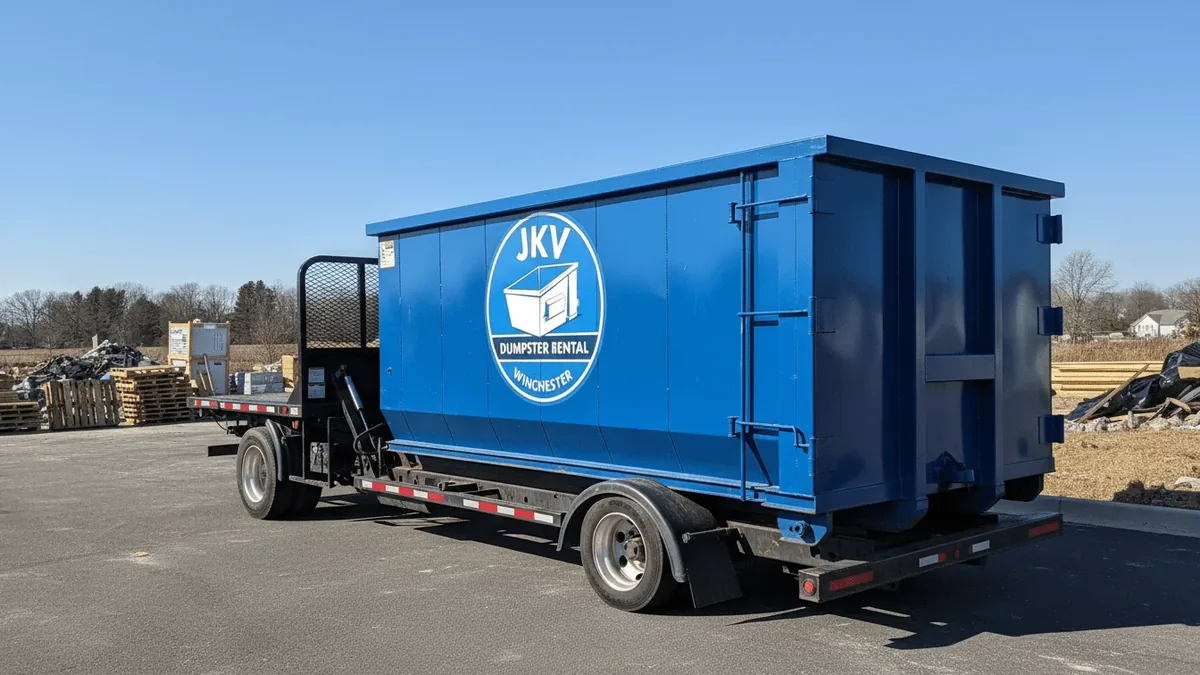
Every contractor working in Winchester and Frederick County ends up managing two jobs at once: the actual build, and the debris it generates. A roll-off dumpster solves the second job, but only if it’s sized right, scheduled right, and loaded the right way. This guide covers what we tell general contractors and trade crews when they set up a job account with us — separating debris types, keeping a container moving through a project, and planning around the two local wrinkles that catch out-of-town crews off guard: karst ground and winter weather.
We work with framing crews, remodelers, roofers, and site contractors across Winchester and out into Frederick County on a regular basis, so this is drawn from what actually slows jobs down, not a generic checklist.
The single biggest cost lever on a construction job isn’t container size, it’s what goes into the container. Debris breaks into two rough categories, and mixing them is the most common way a job overpays.
Wood framing, drywall offcuts, packaging, trim, and general mixed construction debris are bulky but comparatively light. A construction dumpster rental sized for the job handles this efficiently because you’re paying mostly for volume, and the container’s weight allowance rarely becomes the limiting factor.
Concrete, brick, block, asphalt, tile, and other masonry are dense — a container can look mostly empty and still be at its weight limit. This is where a lot of first-time commercial accounts get an unexpected charge, because they load a general-purpose dumpster with concrete the way they would load it with framing scrap. For foundation removal, driveway tear-outs, tile demo, or any masonry-heavy scope, ask about our concrete and heavy debris option, which is priced and sized around weight rather than volume. Keeping concrete and masonry in their own container, separate from general debris, is almost always cheaper than mixing it into a standard box and running into overage weight.
If you’re not sure which category a given scope falls into, tell us the trade and the rough quantity when you book — we’ll point you to the right container rather than let you guess.
Different phases produce different volumes and different debris. A gut-and-remodel job might need a smaller container during demo and a larger one once framing and drywall scrap start piling up. For most single-trade scopes and mid-size remodels, a 20-yard dumpster handles the job in one container. Larger renovations, new-build framing waste, or demolition scopes often call for a 30-yard dumpster instead, particularly when the container needs to sit through multiple phases without a swap. Undersizing to save a few dollars up front usually costs more once a second delivery gets added mid-job.
On active job sites, the container isn’t just a bin — it’s part of the site logistics. A full dumpster that sits for two extra days blocks a laydown area, slows deliveries, and gives inspectors and clients a bad impression. For jobs that will fill more than one container, we set up a swap schedule up front rather than waiting for a crew to call us with a full box and a stalled site.
A few things make swaps run smoothly: giving us a rough timeline when you book so we can plan around your framing, demo, or roofing schedule; keeping a clear path for the truck on swap day, since a blocked driveway or parked trailer means a missed window; and flagging weight-heavy phases (concrete pours, tile demo, masonry) ahead of time so the right container is already on site instead of getting swapped out mid-phase. For multi-container jobs and ongoing accounts, our commercial dumpster rental setup is built around this kind of recurring, scheduled service rather than a single one-off delivery.
Winchester and Frederick County sit on the northern end of the Shenandoah Valley’s limestone karst belt. In practice, that means bedrock can sit closer to the surface than a set of plans might suggest, and ground conditions can be softer or more uneven in spots than they look at first glance. This matters for two reasons on a construction job. First, excavation and foundation crews sometimes hit rock shallower than expected, which is worth flagging early in a bid rather than treating as a surprise change order. Second, it affects where we place the container itself — we look for level, stable ground away from any low spot or soft depression before a roll-off gets set down, since a loaded container is genuinely heavy and uneven ground under one corner isn’t something you want to discover after delivery. If your site has a known soft spot or a spot where previous digging hit rock, tell our driver before drop-off so we can pick a better placement.
The Shenandoah Valley gets real winter weather — ice storms and multi-inch snow events are a normal part of a Winchester winter, not a rare exception. For any job scheduled between late fall and early spring, it’s worth building a day or two of buffer into your debris hauling plan. A container delivery or swap can get pushed by a storm just like any other trade on site, and a driveway or access road that’s iced over is a safety issue for our driver as much as for your crew. Calling ahead when a storm is forecast, rather than assuming a scheduled swap will happen on the exact day, keeps the rest of your schedule from backing up.
Commercial and repeat contractor accounts often need a certificate of insurance on file before work starts — property managers, GCs running subs, and some commercial property owners require it as a condition of site access. We can provide a certificate of insurance for job accounts; the easiest path is to request it when you set up the account or place your first order for a project, rather than the week the job starts, since some property managers want it reviewed in advance.
For questions specific to your project — container size, swap timing, or setting up a commercial account — contact us and we’ll work out a plan around your schedule. You can also see our full services and size lineup before you call.
FAQs
Keep heavy masonry — concrete, brick, block, asphalt, tile — separate from lighter general debris like wood, drywall, and packaging. Masonry is dense and can hit a container’s weight limit while still looking half-empty, so mixing it into a general-purpose dumpster is the most common way a job runs into overage charges. A dedicated concrete and heavy debris container priced around weight is usually the cheaper option for masonry-heavy scopes.
Small amounts are usually fine, but a construction dumpster rental sized and priced for general debris volume isn’t the right tool for a full concrete tear-out. Concrete, brick, and block are heavy enough that a container can max out its weight allowance well before it's visually full. For driveway removal, foundation demo, or similar masonry-heavy work, ask about a dedicated heavy-debris container instead.
For jobs that will fill more than one container, we set a swap schedule when you book, based on your project timeline. Keeping the driveway or laydown area clear on swap day and flagging heavy-debris phases like concrete pours ahead of time helps us bring the right container and avoid a stalled site while a crew waits on a full box to be emptied.
Yes. Winchester and Frederick County sit on a limestone karst belt, which can mean shallow bedrock and occasional soft or uneven spots in the ground. We place containers on level, stable ground away from any low spot or depression, and it helps to point out any known soft ground or shallow rock on your site before delivery so we can pick the best spot.
Yes, we can provide a certificate of insurance for commercial and repeat contractor accounts. It's best to request it when you set up the account or place your first order for a project, since some property managers and general contractors want it on file before work starts.
Ready when you are
Call and you will speak to someone local who knows the streets, the permit rules and which box actually fits your driveway. Flat rate quoted up front.
Keep reading
Clearing out a family home is rarely simple. Here is a practical, step-by-step checklist for sorting, paperwork, donations, and dumpster sizing before you start.
Roofing debris is heavier than most people expect, and it's priced and sized differently than a typical cleanout. Here's how squares and layers determine the right dumpster for a Winchester tear-off.
Winter ice and snow storms in the Shenandoah Valley leave behind downed limbs, damaged gutters, and driveways that are harder to reach. Here's what changes about dumpster delivery after a storm and how to handle the cleanup safely.