Winchester, VA
Concrete & Heavy Debris Dumpster Rental
Concrete, brick, block, tile, dirt and fill are heavy — we size the box around weight, not just volume, so you get the right dumpster the first time.
- Same dayDelivery available
- Flat rateQuoted up front
- Since 2017Locally owned
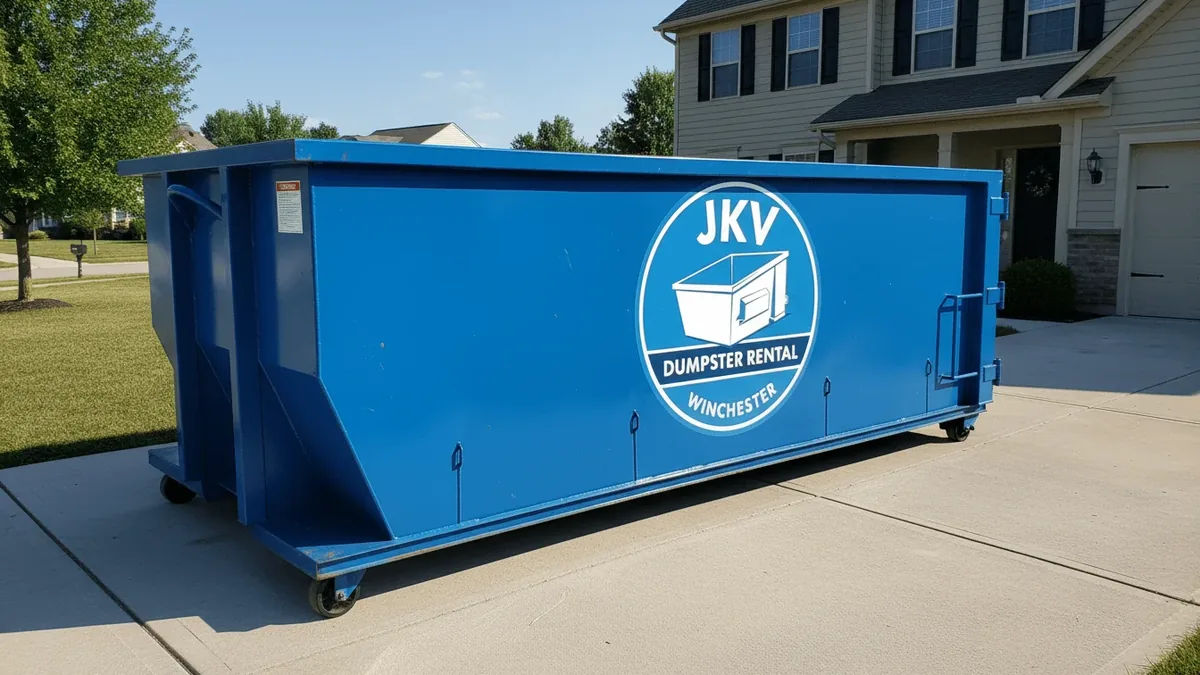
Concrete, brick, block, tile, dirt, and fill dirt are a different animal from household junk or construction scraps. A yard of clean fill weighs roughly a ton, and broken concrete isn’t far behind — which means a box that looks half empty can already be at its legal road-weight limit. We rent dedicated heavy-debris dumpsters for these jobs and help you pick a size based on what the material actually weighs, not just how much space it takes up.
This matters for your wallet and for the truck that comes to haul it. Every roll-off has a maximum weight it can legally carry on the road, and that limit has nothing to do with how full the box looks. We’d rather steer you toward a smaller box and two pulls than have you pay overage fees on a container that was never going to work for a driveway’s worth of old patio slab.
We serve Winchester and Frederick County along with nearby Clarke County, and we deliver with flat, honest pricing and no hidden fees — the same straightforward approach we use on every job, heavy or light.
What we handle on concrete & heavy debris jobs
- Dedicated boxes for concrete, brick, block, tile, dirt, and fill
- Sizing based on actual weight, not just how full the box looks
- Smaller 10 and 15 yard boxes recommended for pure heavy loads to avoid overage charges
- Flat, honest pricing with no hidden fees — you know the cost before we deliver
- Placement on level, stable ground, mindful of local karst conditions
- Driveway protection boards under the wheels on every delivery
Weight Is the Limit, Not the Box Size
With household junk or construction debris, volume is usually what fills a dumpster first. With concrete, brick, block, dirt, and fill, weight gets there first — often when the box is only a quarter or a third full by eye. A 10 yard dumpster loaded with broken concrete can hit its weight limit with material barely covering the floor, and that’s by design: the container and the truck hauling it both have a maximum legal road weight, and going over it means overage charges or, worse, a truck that can’t legally leave your property loaded.
That’s why we default to smaller boxes for pure heavy-material loads and recommend keeping concrete, brick, and dirt separate from lighter mixed debris whenever possible. A dedicated heavy-debris box, sized correctly, almost always costs less than a bigger container that runs into weight overages halfway through the job.
What Goes In a Heavy-Debris Box
Broken concrete slab, driveway and sidewalk removal, brick, cinder block, ceramic and porcelain tile, asphalt millings, and clean dirt or fill from grading and excavation work all belong in this category. Mixing in wood, drywall, or general trash with heavy material doesn’t save you a trip — it just uses up your weight allowance faster with lighter stuff that could have gone in its own load.
If your project is mostly a mix of concrete and regular construction debris, it’s usually cheaper overall to separate the two: a small dedicated box for the heavy material and a standard construction dumpster for everything else, rather than one oversized container trying to do both jobs.
Karst Ground Means Excavation Can Hit Rock Fast
Frederick County and the Winchester area sit on the Great Valley karst limestone belt, and one practical effect of that is shallow bedrock in a lot of yards. Dig for a footing, a patio base, or a drainage line and you can hit solid rock well above the depth you expected — and once that rock comes out, it’s some of the heaviest material we haul. A job you budgeted as “a little dirt” can turn into a rock-spoil load that fills its weight limit fast.
The same karst ground affects where we set the container itself: we place it on level, stable ground and steer clear of any low spot or soft depression, since those can point to uneven subsurface conditions common to karst terrain. If you know your dig is likely to hit rock, tell us up front — we’ll size the box (or plan for a second pull) accordingly instead of guessing.
Right-sized
Which dumpster for concrete & heavy debris in Winchester?
We would rather talk you down a size than sell you air. These are the boxes that suit this work.
10 Yard Dumpster
Our most common recommendation for concrete, brick, or dirt — it hits its weight limit long before it looks full, and it fits tight driveways.
Size details 15Cubic yards15 Yard Dumpster
A step up for larger patio, driveway, or small excavation jobs where you have more heavy material but still need to respect the road-weight limit.
Size detailsLocal knowledge
Concrete & Heavy Debris across Winchester and Frederick County
We haul concrete, brick, block, tile, and dirt out of Winchester and all across Frederick County — driveway tear-outs in Stephens City, patio and sidewalk removal around Clear Brook and Gainesboro, and grading or excavation spoil from jobs out toward Gore and Cross Junction. We also take these jobs into Clarke County, including Berryville and Boyce, and out to Middletown and Round Hill.
Because shallow limestone bedrock is a real feature of this valley, we see more than a few excavation jobs turn up unexpected rock. If that happens on your site, call us before you keep digging — we can often get a second box out same-day or next-day so the job doesn’t sit waiting on disposal capacity.
Towns we cover
We run concrete & heavy debris out of our Brooke Road yard across Winchester and the surrounding suburbs.
FAQs
Concrete & Heavy Debris questions, answered
Why does a small dumpster fill up so fast with concrete or dirt?
Because weight, not volume, is the limiting factor with heavy material. A 10 yard box loaded with broken concrete or dirt can reach its legal road-weight limit while it's still barely a quarter full by eye. The container looks like it has room left, but the truck hauling it has a maximum weight it can legally carry, and that's what actually determines when the load is done.
Can I mix concrete with regular construction trash in one dumpster?
You can, but it usually isn't the cheapest option. Mixing lighter debris in with concrete or dirt just uses up your weight allowance faster with material that didn't need to. If your project has a real mix of both, it's typically more cost-effective to run a small dedicated heavy-debris box alongside a separate construction dumpster for the lighter material.
What size dumpster should I get for a driveway or patio tear-out?
For most driveway, sidewalk, or patio removals we recommend a 10 yard dumpster as the starting point, moving up to a 15 yard for a larger area. We'd rather help you plan for two pulls of a smaller box than put you in an oversized container that hits its weight limit before it's anywhere near full.
Why does excavation in this area sometimes hit rock unexpectedly?
Winchester and Frederick County sit on the Great Valley karst limestone belt, which means shallow bedrock is common. A dig that looks like straightforward dirt work can hit solid rock sooner than expected, and that rock spoil is some of the heaviest material we haul. If you suspect your job might hit rock, mention it when you book so we can size the box with that in mind.
Do you charge extra if my concrete or dirt load goes over the weight limit?
Our pricing is flat and honest with no hidden fees, and we tell you the weight allowance up front when we quote a heavy-debris box. The best way to avoid an overage is to let us help you pick the right size before delivery based on how much concrete, brick, or dirt you actually have — that's the whole reason we default to smaller boxes for this kind of material.
Ready when you are
Book concrete & heavy debris in Winchester
Call and you will speak to someone local who knows the streets, the permit rules and which box actually fits your driveway. Flat rate quoted up front.
Keep going
Related services
Residential Dumpster Rental
Driveway containers for cleanouts, remodels and downsizing across the greater Winchester area.
View serviceSame-Day Dumpster Rental
Call before noon and we will do everything we can to get a box to you today.
View serviceCommercial Dumpster Rental
Scheduled and on-call service for retail, hospitality, offices and property managers.
View service