How Much Does a Dumpster Rental Cost in Winchester, VA?
Dumpster pricing isn't a mystery once you know what's inside the number. Here's what drives cost up or down for a Winchester-area rental, and how to keep a project on budget.
Winchester dumpster guide
From a single-room cleanout to a full renovation, here's how to match your project to the right dumpster size in Winchester and Frederick County — and why weight matters as much as volume.
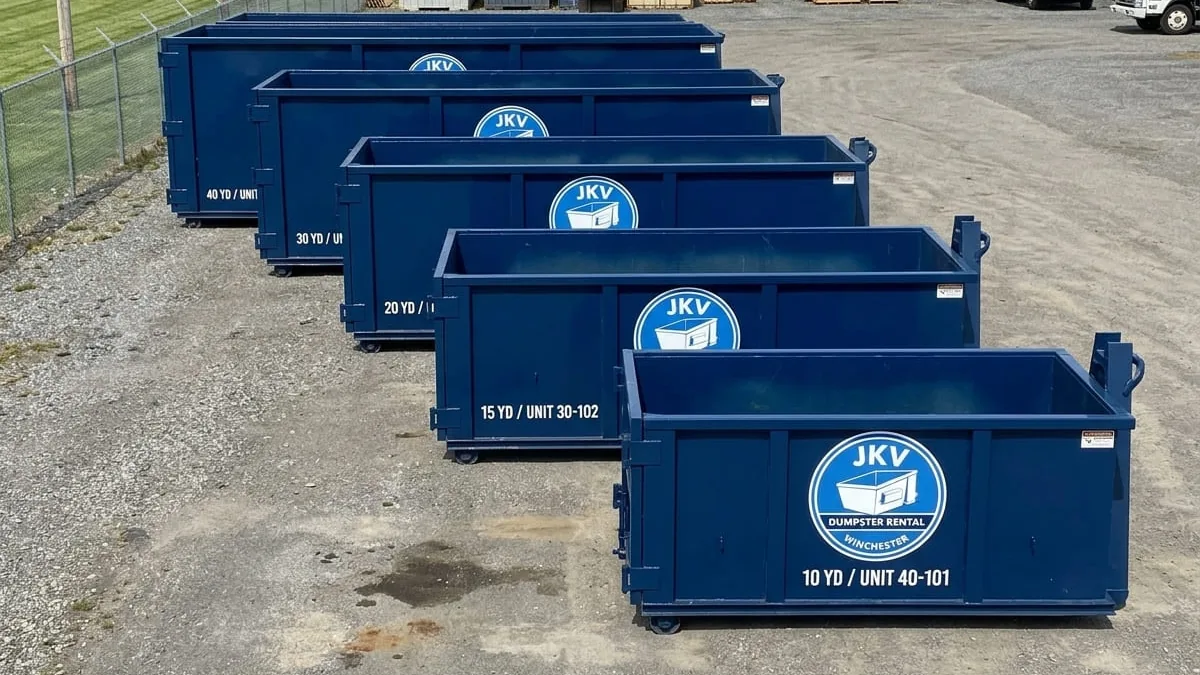
The question we hear most often from Winchester and Frederick County customers is some version of “how big a dumpster do I actually need?” It's a fair question, because guessing wrong in either direction costs you money — too small and you're paying for a second container or an overage fee, too large and you're paying for volume you never use. We rent five sizes: 10, 15, 20, 30, and 40 yard roll-off containers. Below is how we walk customers through the decision, with the same examples we use on the phone every day.
Before getting into sizes, there's one principle that matters more than any chart: a dumpster has two limits, not one. It has a volume limit (how much space is inside the box) and a weight limit (how many tons the rental agreement allows). For light, bulky material — furniture, cardboard, drywall scraps, old carpet — volume is usually what fills up first. For heavy, dense material — concrete, dirt, brick, roofing shingles, tile — the weight limit is almost always what stops you, often when the container still looks half empty. We'll come back to this because it's the single most common source of surprise on a final invoice, and it's avoidable if you plan for it up front.
A 10 yard container measures roughly 12 ft long by 8 ft wide by 3.5 ft high and holds about what three full pickup truck loads would, with a typical weight allowance of 1–2 tons. This is the size we recommend for a single-room cleanout, a small bathroom gut (vanity, tub, tile, drywall), a garage purge, or a small load of concrete or dirt from a patio or walkway removal. Because it's low-sided, it's also easy to load by hand, which matters if you're doing the work yourself rather than bringing in a crew. See the full 10 yard dumpster specs for more detail.
At about 16 ft by 8 ft by 4 ft, holding roughly 4–5 pickup loads and 2–3 tons, the 15 yard is a good fit for a kitchen remodel (cabinets, countertops, flooring), a basement cleanout, a small roof tear-off on a modest home, or a deck removal. It's our most common recommendation for homeowners doing one significant project rather than a whole-house overhaul.
The 20 yard measures about 22 ft by 8 ft by 4.5 ft and handles roughly 6 pickup loads at 3–4 tons. This is the size for a whole-house cleanout, a larger remodel touching multiple rooms, a 20–30 square roof tear-off, or a flooring replacement across a full level of the house. If you're not sure between the 15 and the 20, we generally suggest sizing up — a partially filled 20 costs less than a second 15 delivered mid-project. Compare it against the 20 yard dumpster and the smaller options before deciding.
A 30 yard container is 22 ft by 8 ft by 6 ft, roughly 9 pickup loads, with a 4–5 ton allowance. This is where most of our construction dumpster rental and new-build jobs land, along with major whole-home renovations, estate cleanouts of larger properties, and small demolition projects. The extra height over the 20 yard matters when you're dealing with bulky framing lumber or cabinetry that doesn't stack flat.
Same footprint as the 30 yard (22 ft by 8 ft) but 8 ft tall, holding about 12 pickup loads at a 5–6 ton allowance. We deliver these for commercial fit-outs, large-volume light debris jobs, full teardowns, and roofing projects at scale — think a commercial building re-roof rather than a residential one. It's the right call when volume, not weight, is your constraint. Full specs are on the 40 yard dumpster page.
This is worth repeating because it catches people off guard: concrete, dirt, brick, block, and roofing shingles are dense. A 10 yard box completely full of clean dirt can weigh far more than its 1–2 ton allowance, even though there's visibly still room on top. That's why for concrete, dirt, and similar heavy debris, we often recommend a smaller container filled to a safe, legal level rather than a larger one you can't fill anyway without exceeding the weight limit. If your project is heavy debris specifically — a driveway tear-out, a foundation demo, a load of broken concrete or masonry — talk to us about it directly, because the right size for a heavy load is often smaller than the size that would fit the same volume of household junk. Our concrete and heavy debris service is built around exactly this distinction.
Scenario 1: A kitchen remodel in a Winchester neighborhood. Cabinets, old flooring, drywall, and countertops from a mid-size kitchen typically fill a 15 yard container without much left over. If the remodel also includes ripping out a bathroom at the same time, we'd usually bump that customer up to a 20 yard.
Scenario 2: A roof tear-off on a home outside Stephens City. Shingles are heavy. A typical single-layer tear-off on an average-size roof fits comfortably in a 15 yard by volume, but the weight of the shingles is the real limiting factor — we size these based on square footage and layers, not just how big the roof looks. Our roofing dumpster rental page walks through that math in more detail.
Scenario 3: An estate cleanout of a full house near Berryville or Middletown. Furniture, appliances, boxes of belongings, and general household volume from a full house usually calls for a 20 or 30 yard, depending on how much furniture is staying versus going and whether any construction debris (old flooring, a demoed shed) is part of the job.
Call us and describe the project — square footage, what's coming out, and whether it's mostly light material or heavy debris. We size dumpsters for Winchester, Frederick County, and the surrounding area every day, and a two-minute phone call almost always gets you to the right container the first time. If you'd rather see typical costs by size first, our dumpster rental cost guide breaks that down as well.
FAQs
The 15 and 20 yard containers are our most common residential rentals — the 15 yard fits most single-room remodels, and the 20 yard covers whole-house cleanouts or larger renovation projects. A small cleanout or garage purge is often better suited to a 10 yard.
For light, bulky material like furniture and household junk, sizing up one step is a reasonable default since a partially filled larger container usually costs less than ordering a second smaller one. For heavy material like concrete, dirt, or shingles, sizing up doesn't help once you hit the weight limit — call us and we'll size it based on weight, not just volume.
Every rental includes a weight allowance based on the container size. Loads that come in over that allowance are charged an overage fee based on the extra weight. This is most common with concrete, dirt, brick, and roofing material, which is why we ask about the type of debris up front, not just the amount.
Most residential driveways in Winchester and Frederick County handle a 20 or 30 yard container without issue since the footprint (22 ft by 8 ft) is the same for both — only the height changes. We'll ask about your driveway length and any low-hanging obstructions like tree limbs or wires when we schedule delivery.
The 10 yard is our smallest container. For very small jobs, it's still often the most practical option since it's low-sided and easy to load by hand — give us a call and we can talk through whether it fits your specific cleanout.
Ready when you are
Call and you will speak to someone local who knows the streets, the permit rules and which box actually fits your driveway. Flat rate quoted up front.
Keep reading
Dumpster pricing isn't a mystery once you know what's inside the number. Here's what drives cost up or down for a Winchester-area rental, and how to keep a project on budget.
A straightforward breakdown of what you can toss in a roll-off dumpster in the Winchester area, what needs a separate trip or drop-off, and what always requires a licensed specialist.
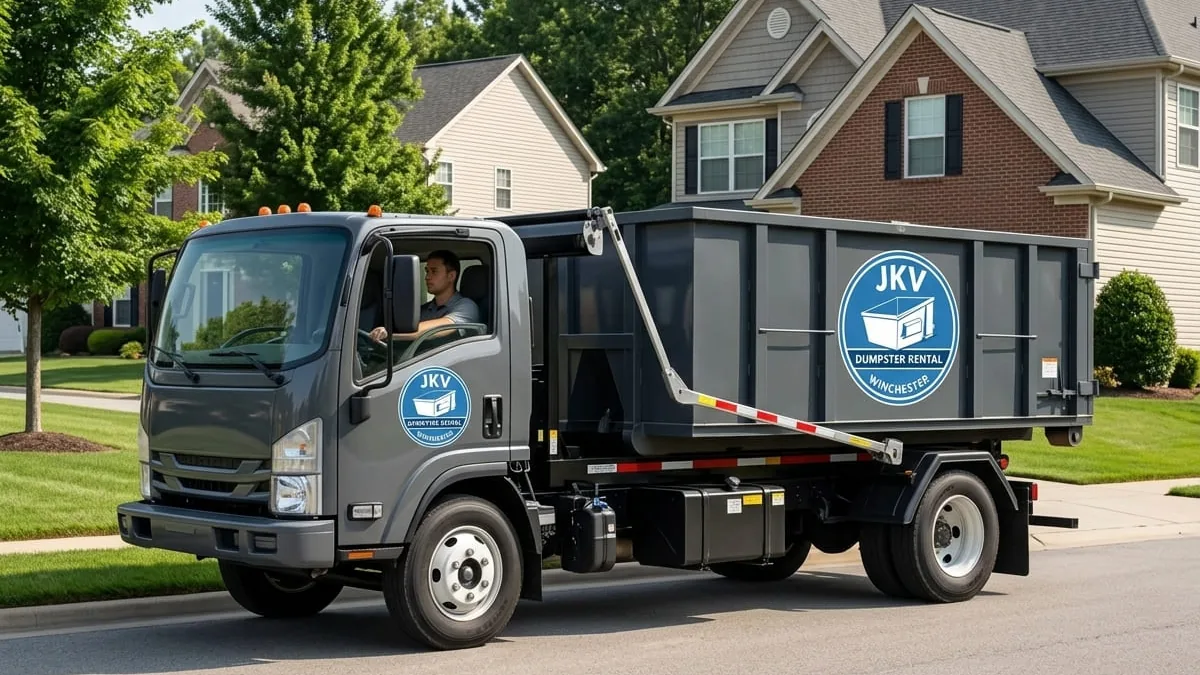
Where the container sits determines everything. Here's the difference between placing a dumpster on your own property and placing one in the street, plus what to check with Frederick, Clarke, or Warren County.