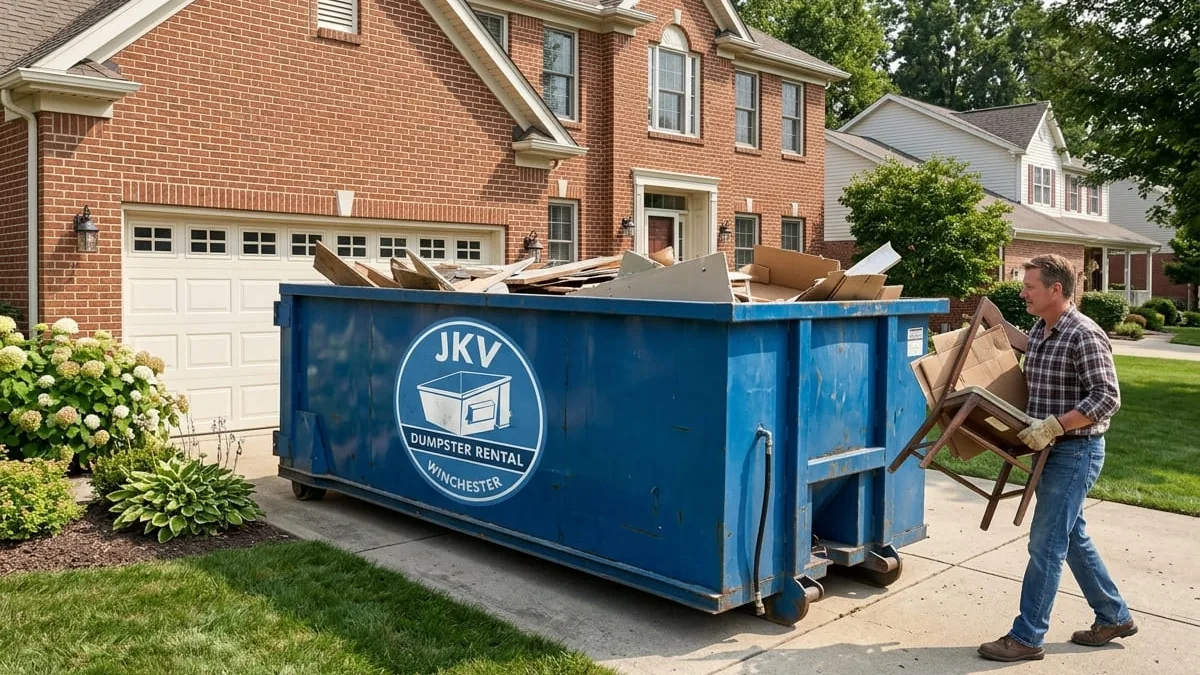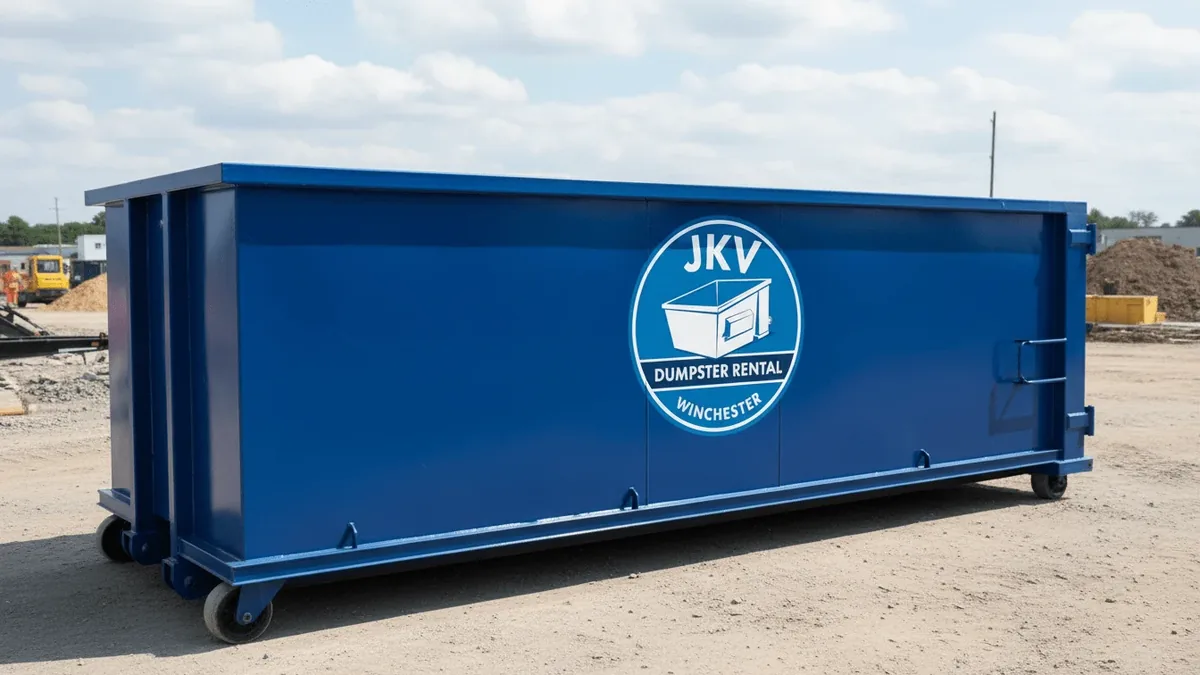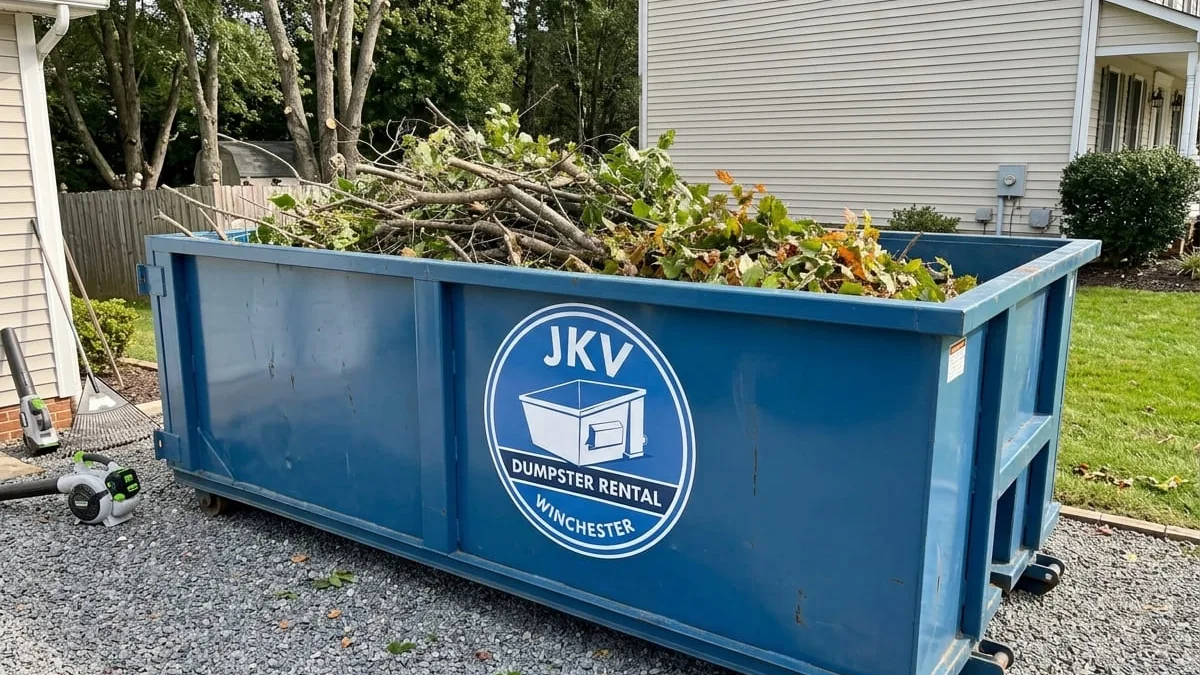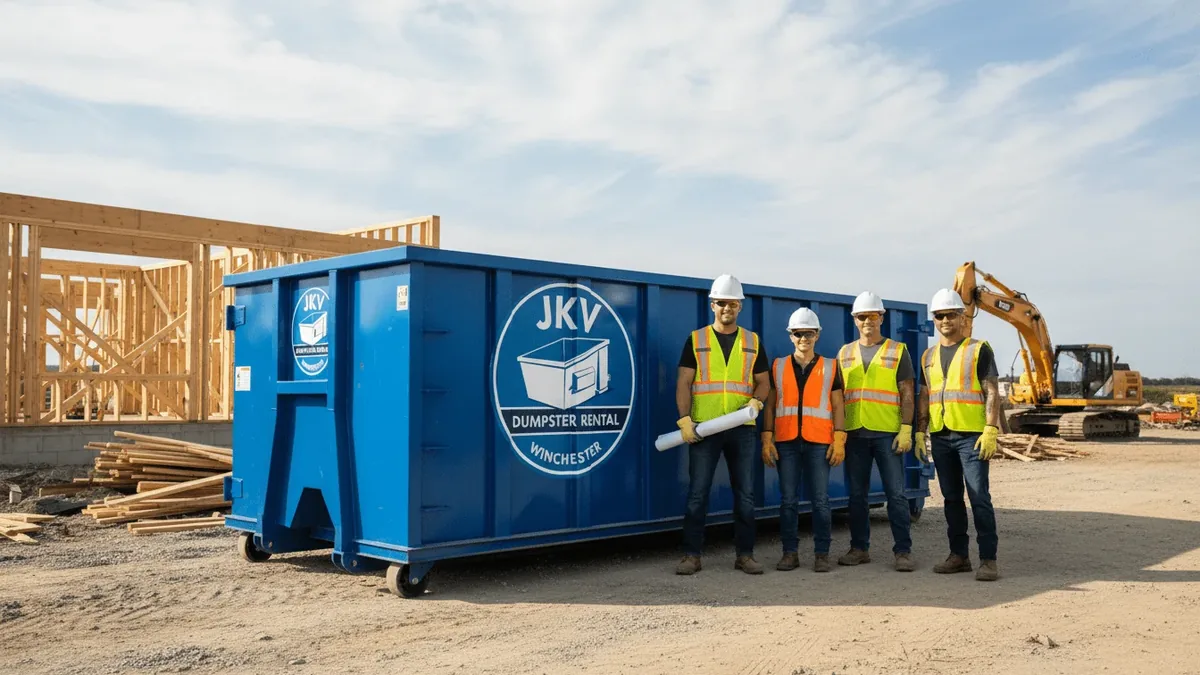
If you've never rented a dumpster for a roof before, the first thing that surprises most homeowners is the weight. A pile of old shingles doesn't look like much sitting in a driveway, but asphalt shingles are dense, and a full tear-off adds up fast. Roofers who work in and around Winchester and Frederick County size roofing dumpsters differently than they would for a kitchen remodel or a basement cleanout — and getting it right up front saves you from an overage charge or a second trip.
This guide walks through how roofing debris is actually measured, what size dumpster fits a typical tear-off, why winter weather here tends to be the trigger behind a lot of these jobs, and how to protect your driveway while the work is underway.
How Roofing Debris Is Sized and Priced: Squares and Layers
Roofers don't talk in square feet — they talk in squares. One roofing square equals 100 square feet of roof surface. A typical single-family home in the Winchester area might run anywhere from 15 to 30 squares depending on the footprint and roof pitch, with larger homes and steeper rooflines running higher.
The other variable is layers. Many older homes have had a second or even third layer of shingles installed over the original layer instead of a full tear-off, which was common practice for years before code changes tightened that up. When a roofer strips a roof down to the deck, every one of those layers comes off, and every layer roughly multiplies the weight and volume you're hauling.
A single layer of standard three-tab or architectural asphalt shingles typically runs in the range of 200 to 300 pounds per square once you include the old underlayment and nails. On an average roof, that's already a couple of tons before you've accounted for a second or third layer. Add a second layer and you're often doubling that weight, not just adding a modest amount — which is why a roofer sizing a dumpster asks about layers first, before anything else.
Why This Matters for Pricing
Dumpster rentals are typically quoted with a weight allowance built into the flat rate, and going over that allowance is where surprise charges tend to come from. Roofing loads hit that weight limit long before they fill the container's visible volume, which is the opposite of a typical household cleanout where you usually run out of room before you run out of weight allowance. That's the main reason roofing jobs get sized and quoted differently than a general cleanout from the start.
One Layer vs. Multiple Layers: Picking the Right Dumpster
As a general starting point for the Winchester area:
- Single-layer tear-off, smaller roof (roughly under 20 squares): a 15-yard dumpster is often enough for a single-layer job on a smaller home, garage, or outbuilding roof.
- Single-layer tear-off, average to larger home (roughly 20 to 30 squares): a 20-yard dumpster is the size we point most homeowners toward for a standard single-layer reroof on a typical Winchester house.
- Multiple layers, or a larger roof: once you're dealing with two or three layers coming off, or a roof on the larger end of the scale, the weight climbs quickly enough that it usually makes sense to step up a size or plan for an additional pull rather than push one container past its limit.
For roofing contractors running larger jobs, tear-offs at scale, or working a multi-layer commercial roof, our roofing dumpster rental service covers sizing recommendations job by job, since every roof is a little different once you factor in pitch, layers, and any rot or decking that's coming off along with the shingles.
Tell us the approximate square footage, how many layers are coming off, and whether it's shingles only or shingles plus decking, and we'll size it correctly the first time.
Winter Ice and Snow: The Roof Damage Trigger Behind Many Winchester Reroofs
A good number of the roofing calls we get through the winter and into early spring trace back to the same cause: ice and snow load. The northern Shenandoah Valley gets real winter storms most years, and when snow sits on a roof and then partially melts and refreezes, it adds weight and can back up under shingles at the eaves. Older roofs, roofs that already had multiple layers, or roofs with marginal flashing tend to show the damage first — missing or lifted shingles, soft spots on the decking, or water staining inside that shows up once things thaw out.
If a winter storm is what brought on your roofing job, it's worth having the roofer check the decking underneath once the old shingles are off, not just the shingles themselves. Ice damage doesn't always stop at the surface layer, and catching soft or rotted decking during the tear-off is a lot easier than finding it later.
Protecting Your Driveway During a Tear-Off
Roofing debris is rougher on a driveway than most other kinds of dumpster loads. Old shingles bring loose nails with them, and tear-off work happens with the dumpster sitting in place for the whole job, not just a quick drop and pickup. A few things we do as standard practice on roofing jobs:
- Driveway protection boards under the container's wheels and contact points, the same way we do for any delivery, to spread the weight and protect asphalt or concrete from scarring.
- Placement away from garage doors and walkways where foot traffic and vehicle tires cross, since loose nails and shingle grit tend to end up on the ground around the container during loading.
- A level, stable spot for the container itself — a loaded roofing dumpster is heavy, and we want it sitting square on solid ground for the whole rental period, not shifting or settling unevenly.
It's also worth running a magnetic nail sweep over the driveway and any nearby walkways once the tear-off is done, even with careful loading. Roofers do this as a matter of course, but it's a good habit to double check yourself, especially if you have kids or pets who use the driveway.
Ready to Size Your Roofing Job?
Whether you're a homeowner dealing with storm damage or a roofer lining up dumpsters for the season, call us at (540) 546-5055 and tell us the roof size and layer count. We'll get you the right container size and have it on-site in Winchester or anywhere in our Frederick County service area, usually same-day or next-day. You can also see full details on our roofing dumpster rental page or reach out through our contact page.