If you have lived in the Winchester area for more than a winter or two, you already know a significant winter storm can roll through the Shenandoah Valley and leave a mess behind. Ice coats the trees, heavy wet snow piles up on branches, and by the next morning you have got limbs down in the yard, a gutter pulled loose, or siding cracked where a branch let go. Cleaning that up usually means renting a dumpster, but a storm changes a few things about how that delivery works. Here is what to expect.
Winter Storms Are a Real Part of Life Here
The northern Shenandoah Valley gets its share of serious winter weather. Multi-inch snow and sleet events are common enough that most homeowners here keep a rake, a chainsaw, and a tarp ready by January. When a storm brings down limbs, damages a roofline, or flattens a fence, the debris does not clean itself up, and it usually needs to go somewhere fast — especially if it is blocking a driveway or a spot near the house that needs to stay dry.
What Changes About Delivery After a Storm
A normal dumpster rental delivery is pretty simple: we find a flat spot near the work, lay down protection boards, and drop the container. After a storm, a few things need extra attention.
We Need a Clear, Level, Accessible Spot
Our driver still needs a flat, stable area to set the container down safely, and that gets harder to find right after a storm. Ice patches, standing meltwater, and downed branches can turn an easy driveway drop into a spot that needs a second look. If part of your driveway is blocked or icy, let us know before the truck arrives so we can plan around it or talk through a backup spot.
Downed Limbs and Debris Can Slow the Truck Down
A roll-off truck needs a clear path in, and a driveway or street partially blocked by a fallen limb, a snapped fence post, or storm wreckage can slow delivery or make it impossible until the path is cleared. If you can safely move small debris out of the drive before we arrive, that helps. Anything large, heavy, or tangled in wires should stay put until it can be handled safely — more on that below.
Wet Debris Weighs More Than People Expect
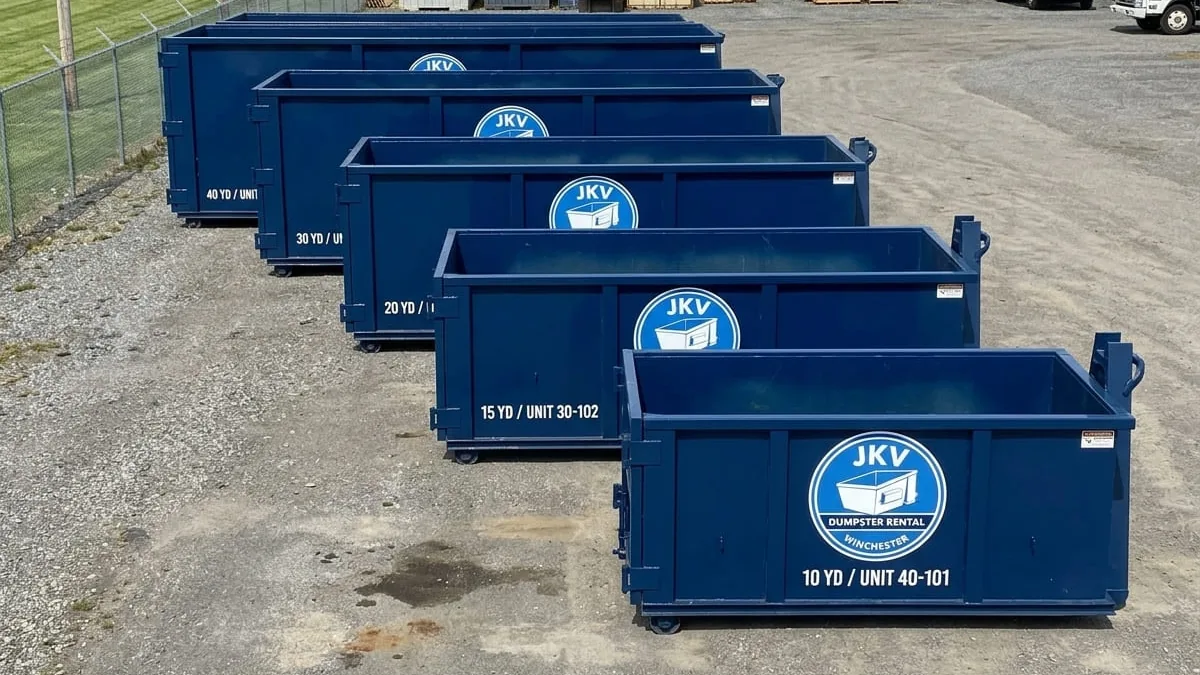
This is the one that catches folks off guard almost every time. A pile of tree limbs and brush that looks manageable can be surprisingly heavy once it has been soaked by snowmelt or sitting under ice for a few days. Wet wood, waterlogged shingles, and soggy insulation all weigh noticeably more than the same material dry. If you are filling a container with storm debris, it is worth sizing up rather than guessing tight, since a load that looks like it will fit in a 10 yard container can push toward what a 15 or 20 yard container handles more comfortably. Give us a call and describe what came down and we will help you land on the right size before delivery.
Same-Day and Next-Day Delivery During the Post-Storm Rush
Right after a storm, a lot of households and property managers in the area are trying to clean up at once, which naturally puts pressure on delivery schedules. We do our best to keep same-day and next-day dumpster rental available when conditions allow it, particularly for debris that is blocking access to a home or business. Calling early once the weather clears gives us the best shot at getting a container out quickly.
Safety Comes Before Cleanup
A few safety notes are worth repeating every storm season. Never approach a downed power line, even one that looks dead, and keep kids and pets well away from any wire on the ground — call the utility company to report it rather than moving it yourself. If a limb or piece of debris is resting against a line, leave it alone until the utility crew has cleared it. It is also worth letting our driver take a look at the delivery area once they arrive. Storm conditions change a yard fast, and our driver is used to spotting a soft or unstable patch of ground, a low spot holding water, or a placement that looks fine at a glance but is not safe for a loaded container. We would rather move a few feet to a better spot than risk the container settling somewhere it should not.
Yard Waste vs. Mixed Storm Debris
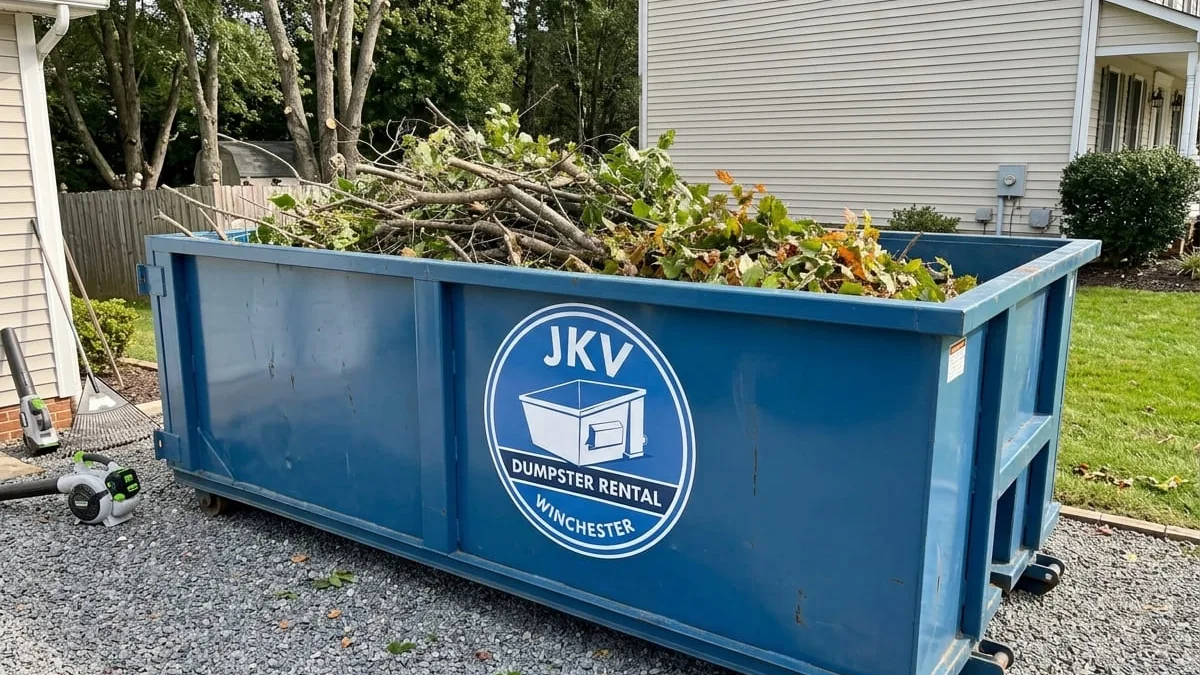
Not every storm cleanup load looks the same, and it helps to know the difference going in. If your cleanup is limbs, brush, and yard debris only, our yard waste dumpster rental is usually the better fit and can be more cost effective than a mixed load. If the storm also damaged a structure — a section of gutter, damaged siding, a chunk of roofing, or a fence that needs full replacement — that debris typically goes in as a mixed construction-style load instead, since building materials and yard debris are often handled differently once they leave your property. If you are not sure which category applies, describe the cleanup when you call and we will point you to the right setup.
Placement Still Matters, Storm or Not
Even with a storm cleanup underway, the same ground conditions we always watch for around Winchester still apply. The area sits on karst limestone terrain, which means shallow bedrock and occasionally softer or uneven ground in spots that are not always obvious just by looking. We cover how that affects container placement in more detail in our guide to dumpster placement on Winchester's karst terrain, and it is one more reason we like to have a driver eyeball the spot before the container comes off the truck, storm or no storm.
If a winter storm has left your property with downed limbs, damaged gutters, or a mess you just want gone, give us a call. We will help you figure out the right container size, get a delivery scheduled as fast as conditions allow, and make sure it lands somewhere safe and solid.