Frederick County Recycling Guide: What Homeowners Need to Know
A plain-language look at how recycling, yard waste, and hazardous waste disposal work in Frederick County — and where a rented dumpster fits into the picture.
Winchester dumpster guide
Winchester and Frederick County sit on the Shenandoah Valley's karst limestone belt, which is worth understanding before you decide exactly where a heavy roll-off container should sit. Here's the geology in plain terms, plus the everyday driveway and access basics every delivery depends on.
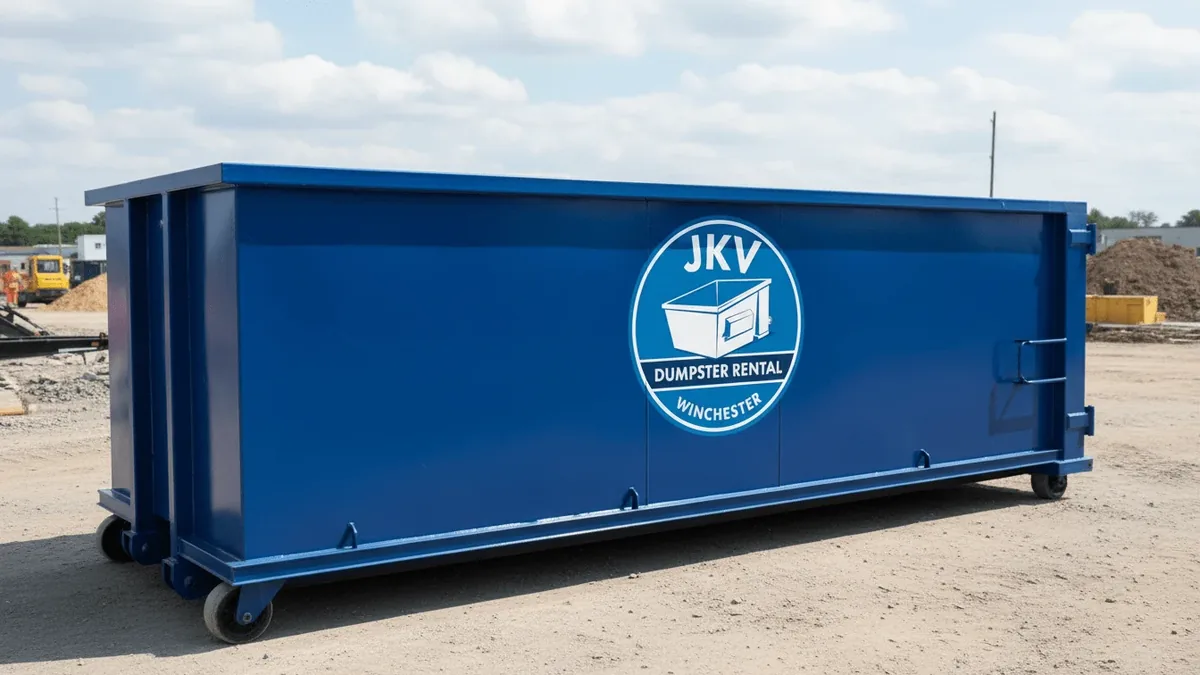
When most people think about where to put a dumpster, they think about the driveway: is it wide enough, is it long enough, will the truck fit. Those questions matter, and we'll cover them below. But here in Winchester and Frederick County, there's a second question worth understanding, too — not because it should worry you, but because a little background helps you make a better call about where a loaded container sits for a week. We're built on karst.
This guide covers both sides of dumpster placement in the northern Shenandoah Valley: the regional geology and what it means for ground stability, and the standard access logistics — driveway length, width, and clearance — that apply to any roll-off delivery anywhere.
Winchester and Frederick County sit within what geologists call the Great Valley, the broad limestone-floored section of the Shenandoah Valley that runs through this part of Virginia and into neighboring West Virginia. Virginia's state geological survey and academic research on the region document this area as part of the Northern Great Valley Karst — a landscape shaped by limestone bedrock that sits relatively close to the surface and dissolves slowly over time as water moves through it.
Karst terrain isn't unique to Winchester; it covers large stretches of the valley. But it does mean a few things are more common here than on, say, granite or sandstone ground: shallow bedrock, naturally uneven or softer patches of soil in certain spots, and occasional sinkhole activity. None of this is rare or alarming — it's a documented regional feature, not a sign that anything is wrong with a given property.
This is a ground-composition issue, not a slope issue. Winchester sits on the valley floor, not hillside, so this isn't about steep grades or drainage off a hill — it's about what's underneath a flat yard, worth knowing the same way you'd want to know your soil type before planting a garden.
A loaded roll-off container is heavy. A full 20-yard dumpster can carry several tons of debris, concentrated on a fairly small footprint for days at a time. On most ground that's a non-issue, but it's why we ask a few basic questions before we drop a container rather than assuming any flat-looking spot will do.
The practical takeaway: pick level, stable, well-compacted ground for the drop spot, and steer clear of any low spot, soft patch, or depression that looks different from the ground around it. A visible dip where water tends to pool, or a soft spot that gives more than the rest of the lawn, is worth a second look before it becomes the spot a loaded container sits on for a week. It doesn't necessarily mean anything is wrong — it could just be poor drainage or old fill — but on karst ground, an unusual depression is worth noticing rather than ignoring.
For most residential and light commercial jobs, a standard driveway or parking area works fine and this is a five-minute conversation, not a construction project. See our roll-off dumpster rental page for how delivery and pickup normally work.
Ground stability is one part of placement. The other part — the part that applies on every job, everywhere, karst or no karst — is making sure the truck can get the container to your property and set it down cleanly. A few numbers help:
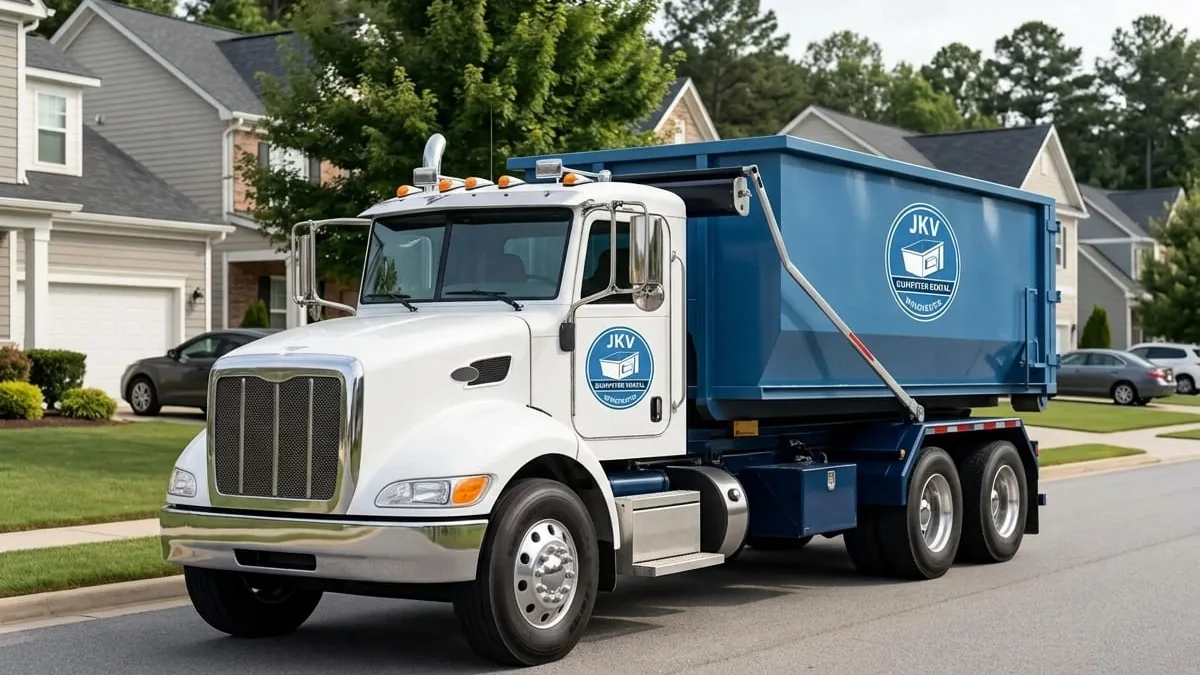
If your driveway is tight, sloped where it meets the street, or shared with a neighbor, tell us when you book. We'll often place the container on the street-facing end of the driveway instead of tucking it deep into the property, or suggest an alternate spot on the lot. Placing a container in the street or public right-of-way instead of on your own driveway generally requires a Right-of-Way Work Permit from the City of Winchester's Public Services Department; placement on your own driveway or property typically does not.
We also protect your driveway surface with boards under the container's wheels as standard practice, not an upsell — that's true everywhere in our service area, regardless of what's underneath the pavement.
Karst geology becomes directly relevant on a different kind of job: excavation, foundation work, or demolition where digging is involved. Because bedrock in this region can sit closer to the surface than in areas without karst, contractors sometimes hit rock sooner than a project's plans anticipated. That's a conversation for your excavation or demolition contractor and doesn't change how a dumpster rental works, but it does affect how much debris comes out of the ground and how heavy it is — broken rock and concrete are dense.
If you're planning a foundation repair, a pool removal, or any job where digging is part of the scope, size your container with that density in mind rather than by volume alone. Our construction dumpster rental and demolition debris pages cover weight limits for heavier material, and a 20-yard dumpster is a common middle-ground size for renovation and small demolition work where debris runs heavy.
None of this requires special equipment or an extra fee — it's mostly a matter of asking the right questions before delivery day. When you book with us, we'll typically ask about the surface you're placing the container on, whether the spot is flat, and whether you've noticed any soft or sunken areas nearby. If anything sounds unusual, we'll talk through an alternate spot on your property. This is standard practice for us in Winchester and Frederick County, not a special service tied to a particular job.
We're not geotechnical engineers, and we won't pretend to diagnose what's happening underground. If you already know your property has a documented sinkhole, an active settling issue, or a foundation concern, that's a job for a licensed geotechnical or foundation contractor before anything heavy gets placed on the site — dumpster included. For the vast majority of driveways and yards in our service area, this is a non-issue: pick solid, level ground, avoid any obvious depression, and the rest is routine.
Have questions about where a container should go on your specific property? Contact us and we'll talk it through before delivery day.
FAQs
No. Karst limestone geology is a well-documented, normal feature of the northern Shenandoah Valley, including Winchester and Frederick County. It means shallow bedrock and occasional sinkhole activity are known regional characteristics, not that any particular property has an active problem. The vast majority of driveways and yards here are perfectly stable and routine to work with.
Look for level, well-compacted ground with no visible low spot, soft patch, or depression. If an area holds water after rain, feels spongy underfoot, or looks like it has settled compared to the ground around it, choose a different spot or ask us about an alternative when you book.
Winchester and the surrounding area sit on the floor of the Shenandoah Valley, not on steep hills. The placement consideration here is ground composition — shallow limestone bedrock and occasional soft or sunken spots — rather than slope or grade.
As a general guide, plan on about 60 feet of straight approach for the delivery truck and 10 to 12 feet of clear width, plus overhead clearance for tree limbs or low overhangs near the drop spot. Tighter driveways can often still work; just mention the layout when you book so we can plan the delivery.
Placement on your own driveway or property generally does not require a permit. If a container needs to sit in the street or public right-of-way instead, the City of Winchester requires a Right-of-Way Work Permit through its Public Services Department. We can help you figure out which situation applies before delivery.
Ready when you are
Call and you will speak to someone local who knows the streets, the permit rules and which box actually fits your driveway. Flat rate quoted up front.
Keep reading
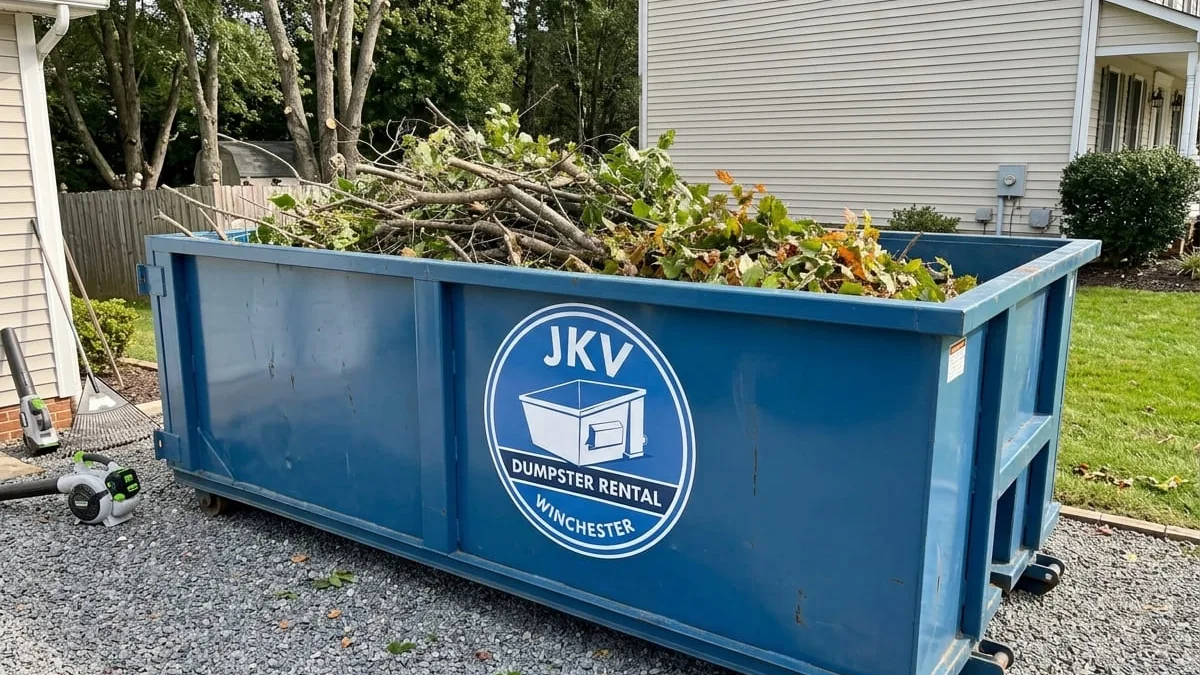
A plain-language look at how recycling, yard waste, and hazardous waste disposal work in Frederick County — and where a rented dumpster fits into the picture.
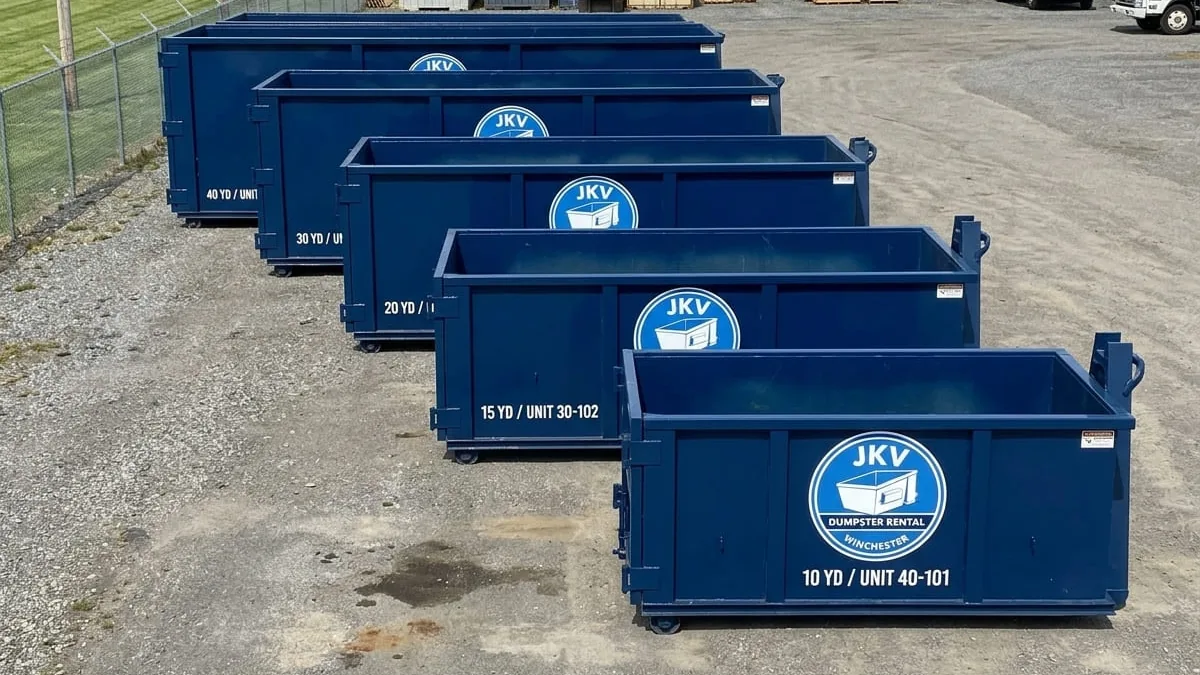
From a single-room cleanout to a full renovation, here's how to match your project to the right dumpster size in Winchester and Frederick County — and why weight matters as much as volume.
Dumpster pricing isn't a mystery once you know what's inside the number. Here's what drives cost up or down for a Winchester-area rental, and how to keep a project on budget.